Fluctuations in electricity prices have become one of the biggest threats to the profitability of manufacturing companies. In energy-intensive industries, electricity costs often account for 20–40% of total production costs, so a sudden price jump on the exchange can change the financial forecast of the entire business overnight. More and more Lithuanian and Baltic manufacturers are looking for a way to lock in prices for the long term — and increasingly, the answer is a PPA contract.
What is a PPA agreement?
PPA. Power Purchase Agreement, lit. power purchase agreement) is a long-term contract between a green energy producer (the owner of a solar or wind power plant) and an electricity consumer, usually a manufacturing or industrial company. The contract stipulates in advance the price and quantity of electricity the electricity company will purchase over the entire contract period, which usually lasts 10–15 years.
The idea is simple: instead of buying electricity on the exchange at an unpredictable price, you contract directly with a renewable energy producer and know the price of your electricity for many years to come.
Why PPA is the best solution for manufacturing companies
1. Price stability and predictability
The main value of the PPA is — electricity price fixing for business. The price fixed in the contract protects the company from stock market fluctuations caused by geopolitics, weather conditions, gas prices or fuel taxes. The finance department can accurately plan costs 10-15 years ahead, which strengthens the company's negotiating position with customers and investors.
2. No need to invest your own capital
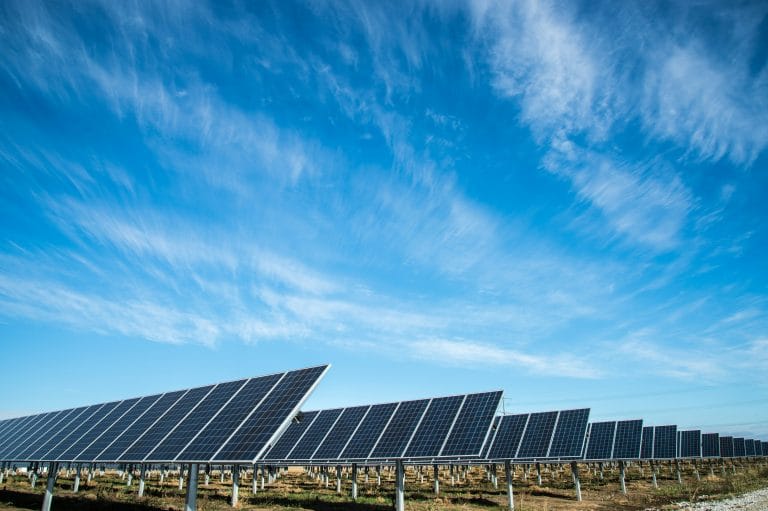
This is often the deciding argument. When concluding a PPA agreement, the company does not need to invest in the construction of a power plant. A solar farm or wind farm is financed, built and maintained by a manufacturer or project developer. The company simply buys the electricity produced at an agreed price.
The capital that would have been allocated to the power plant remains free for core activities — production expansion, equipment upgrades, or working capital. There is no large capital commitment on the balance sheet, no need to worry about maintenance or the risk of operating the power plant.
3. Lower price than on the exchange
Purchasing green energy through a PPA is often cheaper than the average exchange price in the long term. The cost of generating solar and wind energy has fallen significantly in recent years, allowing producers to offer a competitive fixed rate, which often proves superior to the volatile exchange price in the long term.
4. Sustainability goals and ESG
By entering into a PPA, a company purchases actual renewable electricity, not just guarantees of origin. This directly reduces the company's carbon footprint and helps achieve ESG and sustainability goals. Renewable energy for industry is becoming not only a tool for cost management, but also a tool for competitive advantage — more and more partners and customers are demanding a green supply chain.
Types of PPA contracts
- Physical (on-site) PPA — the power plant is built on or near the company's territory, electricity is supplied directly. Suitable for companies with free space (roof or land).
- Remote (off-site/virtual) PPA — the power plant is built in another location, and electricity is supplied through the general network. Suitable for companies that do not have their own area for the power plant.
The choice depends on the company's consumption profile, available space, and network capabilities.
What does the PPA implementation process look like?
- Consumption analysis — the company's annual electricity demand and consumption profile are assessed.
- Solution modeling — the optimal size, type (solar/wind) and PPA structure of the power plant are selected.
- Contract terms negotiation — price, quantity, duration and indexation conditions are agreed upon.
- Implementation — the power plant is built and connected, and electricity supply begins at the agreed price.
Is a PPA right for your company?
A PPA agreement is particularly beneficial for manufacturing and industrial companies that:
- has a high and stable annual electricity consumption,
- wants to protect against fluctuations in electricity prices,
- seeks to reduce costs without freezing its capital,
- has sustainability or ESG commitments.
Energobalt — your partner in green energy solutions
Energobalt helps manufacturing and industrial companies secure stable, low electricity prices for the long term through individually tailored PPA solutions. We assess your consumption, select the optimal renewable energy model and take care of the entire process - from analysis to the start of supply.
Want to know how much you could save with a PPA contract? Contact us and get a personalized offer for your company.

Renewable energy solutions for business and investors in Lithuania.